
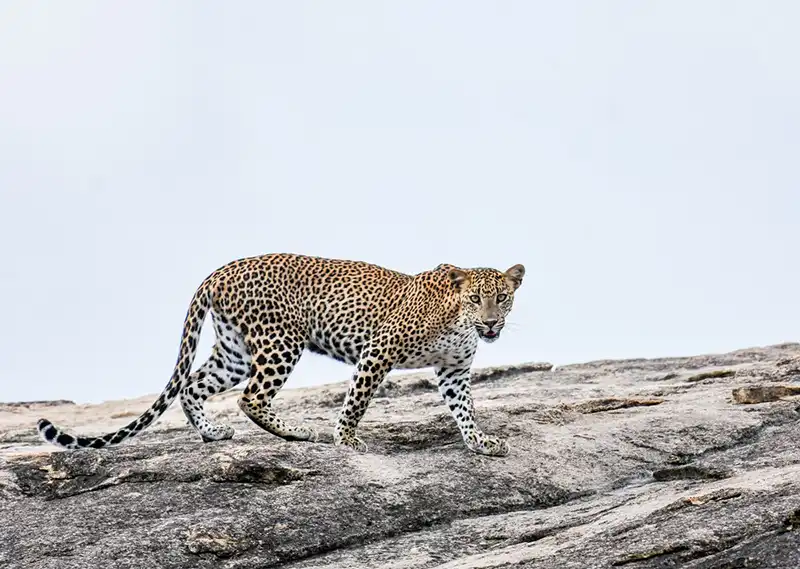
Yala National Park is open to visitors most of the year, with the park typically closing for its annual maintenance break during parts of September and October — worth checking before you book if you're travelling then. Outside of that closure, both the dry season (roughly May to September) and the wetter months each offer a different kind of safari.
Dry Season: Easier Sightings Around Waterholes
During the drier months, vegetation thins out and wildlife tends to concentrate around the park's remaining waterholes and tanks. This can make leopards, elephants and other wildlife somewhat easier to spot, since animals have fewer places to hide and fewer water sources to visit.
Morning vs Afternoon Safaris
Early-morning safaris (typically 5:00 AM starts) catch the park cooler and quieter, with wildlife often still active from the night before. Afternoon safaris run into the early evening and can be rewarding too, especially as temperatures drop and animals become active again. Neither session guarantees a sighting — wildlife behaviour is genuinely unpredictable — but both give you a real chance.
Full Day vs Half Day
A full-day safari gives you both the morning and afternoon activity windows in one trip, with a break during the heat of midday — useful if you only have one day to give Yala a proper chance. A half-day safari is a good option if you're short on time or prefer to build a session around the rest of your itinerary.
Whichever you choose, our drivers know the park's routes and the areas that have been active recently, and will use that local knowledge to plan your route — while always respecting park regulations and keeping a safe, responsible distance from wildlife.